How to Invest to Beat Inflation in Nigeria in 2026
How to Invest to Beat Inflation in Nigeria in 2026: A Comprehensive Strategic Guide
The Nigerian economy in 2026 presents a unique paradox of challenges and opportunities. While the nation continues to navigate the complexities of structural reforms, high interest rates, and currency shifts, savvy investors are finding ways to not only protect their capital but also grow it significantly. For those asking how to invest to beat inflation in Nigeria in 2026, the answer lies in a proactive, diversified, and data-driven approach that looks beyond traditional savings accounts and into the heart of the country’s economic transformation.
In this deep-dive guide, we will explore the inflation outlook for 2026, the best asset classes for wealth preservation, tactical strategies for various risk profiles, and the emerging sectors that are defining the next decade of Nigerian prosperity. To beat inflation, one must understand both the macro-economic forces at play and the micro-level opportunities that arise when a market is in flux.
The Inflation Landscape in Nigeria: 2026 Outlook and Reality Check
Understanding the environment is the first step to conquering it. As of early 2026, the inflation narrative in Nigeria is divided between optimism from the authorities and caution from international observers. Government projections, led by the Ministry of Budget and Economic Planning, suggest a cooling to around 14.21%, thanks to the maturation of agricultural interventions and improved crude oil production. Similarly, the Central Bank of Nigeria (CBN) maintains a headline inflation forecast near 12.94%, driven by a tighter grip on money supply.
However, international bodies like the IMF and various global rating agencies warn of potential spikes up to 37% in the first half of the year. This discrepancy is largely attributed to the “base effect” and the ongoing adjustments in the energy sector as the nation moves towards full cost-reflective pricing. Whether the actual number settles at 13% or 30%, the fundamental principle remains the same: inflation in Nigeria stays significantly higher than global averages.
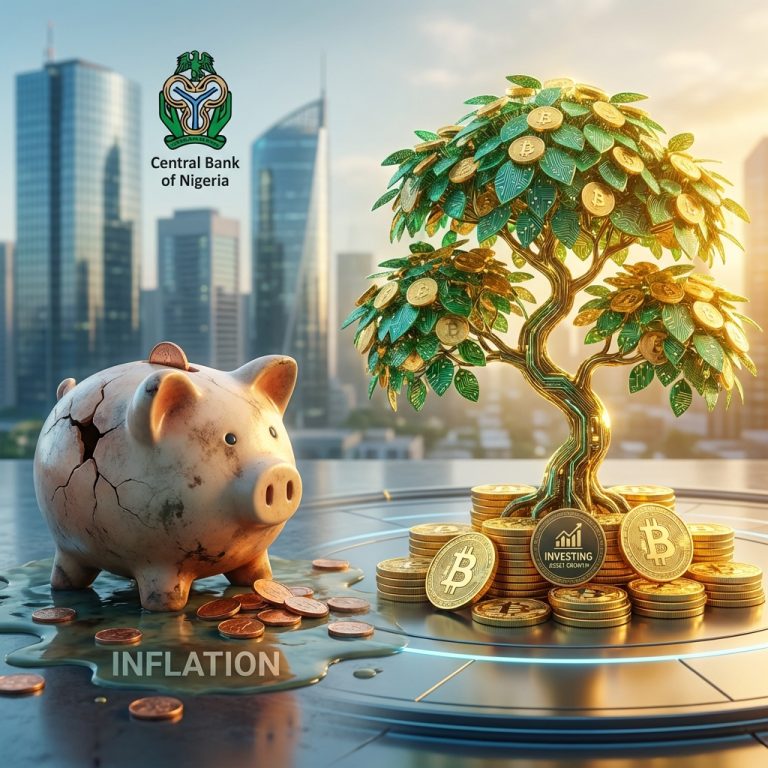
In such an environment, the “purchasing power” of the Naira is constantly under siege. If your annual investment return is 15% while inflation is 20%, you are technically 5% poorer at the end of the year in real terms. Therefore, the goal for any investor in 2026 is simple yet demanding: achieve a Real Rate of Return.
Strategy 1: High-Yield Fixed Income Instruments — The Foundation of Stability
In a high-inflation environment, the “risk-free” or low-risk assets often provide the most immediate and reliable shield. With the CBN maintaining a relatively tight monetary policy through most of 2025 to curb excess liquidity, interest rates on government-backed and money market instruments remain at historic highs as we enter 2026.
1. Money Market Funds (MMFs) and Mutual Funds
Money Market Funds have become the most accessible tool for Nigerian retail investors. In 2026, top-tier MMFs are offering yields between 22% and 26% per annum. These funds pool capital from thousands of investors to buy short-term debt instruments like Treasury Bills, Commercial Papers, and high-quality corporate bonds.
- Why they work: They offer high liquidity, allowing you to withdraw funds within 24 to 48 hours, and provide better returns than traditional fixed deposits which often lag behind market rates.
- The 2026 Advantage: With the 2026 economic environment favoring professional fund management, MMFs provide a way to access high-yielding institutional papers that individuals might not be able to buy directly due to high minimum entry requirements (often 50 million Naira or more for direct commercial papers).
- Compounding Power: By setting your dividends to “re-invest” automatically, you benefit from the power of compounding, which is the most effective way to outpace inflation over a 12-month period.
2. Treasury Bills (T-Bills) and FGN Bonds
Nigerian Treasury Bills continue to be a cornerstone of inflation-beating portfolios, especially for those who prioritize capital preservation. In the first half of 2026, stop rates for 364-day bills have hovered between 18% and 22%.
- The Tax-Free Advantage: T-Bills are tax-free, meaning the 20% yield you see is the 20% you get. This is a massive advantage over dividend-paying stocks which are subject to a 10% withholding tax.
- Strategic Play for 2026: Lock in long-term T-bills early in the year. There is a strong possibility that the CBN will begin a gradual easing of interest rates by Q4 2026 if inflation shows consistent downward trends. If you lock in a 20%+ yield now, you will be earning that rate even if market rates drop to 15% later in the year.
- FGN Savings Bonds: For the smaller investor, the FGN Savings Bond remains a brilliant option, offering quarterly interest payments and a guaranteed return of principal.
Strategy 2: Strategic Equities on the Nigerian Exchange (NGX) — The Defensive Growth Play
The Nigerian stock market delivered a stellar 51% return in 2025, outperforming many global indices. Equities are a natural hedge against inflation because companies can often pass on increased costs to consumers through higher prices, thereby protecting their profit margins. However, 2026 requires a “quality over quantity” approach.
1. The Banking Sector: The Recapitalization Dividend
The 2026 banking landscape is dominated by the “super banks” that successfully met the new capital requirements set by the CBN. These banks are now more robust, better capitalized, and capable of funding massive infrastructure and energy projects.
- Focus: Look at Tier-1 banks (often referred to as FUGAZ) that have high dividend payout ratios and strong foreign exchange liquidity.
- Growth Drivers: As the economy stabilizes, credit growth is expected to accelerate. Banks that have integrated AI into their lending processes are seeing lower default rates and higher profitability in 2026.
2. The Agriculture and Agro-processing Sector: Hedging at the Source
Food inflation is often the highest and most stubborn component of the Nigerian Consumer Price Index (CPI). By owning shares in food producers, you are essentially “hedging with the source.”
- Key Players: Companies like Presco, Okomu Oil, and Dangote Sugar are essential for any inflation-beating portfolio. These companies produce essential commodities that people cannot stop buying regardless of the price.
- The Export Hedge: Many of these agricultural giants export products like palm oil and rubber to global markets. This allows them to earn revenue in Dollars while their primary costs are in Naira, leading to massive expansion in profit margins during times of currency volatility.
3. The “Dangote Effect”: Major Listings in 2026
The highly anticipated public listing of the Dangote Petroleum Refinery and Petrochemicals in 2026 is expected to be a market-defining event. This is not just another stock; it is an investment in Nigeria’s energy independence.
- Why it Matters: The refinery is expected to stop the massive outflow of foreign exchange for petrol imports, which should theoretically stabilize the Naira. Investing in this entity provides a front-row seat to one of the most significant industrial achievements in African history.
- Tactical Tip: Keep a “cash war chest” ready for the IPO or the early weeks of secondary trading, as this stock is expected to see high demand from both local and foreign institutional investors.
Strategy 3: Real Estate and REITs — The Tangible Wealth Preserver
Real estate has historically been the ultimate inflation hedge globally, and Nigeria is no exception. In 2026, the focus has shifted from speculative “bush land” flipping to yield-generating rental properties and Real Estate Investment Trusts (REITs).
1. Residential and Student Housing
With Nigeria’s population continuing to grow, the demand for affordable housing in major hubs like Lagos, Abuja, and Port Harcourt remains insatiable. Specifically, student housing near federal and state universities has become a “cash cow” for investors, offering consistent rental yields that often increase annually in line with inflation.
2. Strategic Warehousing and Logistics
The e-commerce boom in Nigeria (led by firms like Jumia and Konga) and the growth of local manufacturing have created a massive shortage of modern warehousing. Investing in industrial real estate or logistics hubs near major ports and highways is a high-conviction play for 2026.
3. Real Estate Investment Trusts (REITs)
For those who do not have the millions required to buy physical property, REITs offer a professional and liquid alternative.
- Low Barrier to Entry: You can invest as little as 50,000 Naira.
- Dividends: REITs are mandated by law to distribute a significant portion of their rental income to shareholders as dividends, providing a steady stream of passive income.
Strategy 4: Dollar-Denominated Assets — The Currency Shield
The volatility of the Naira remains a significant factor in 2026. To truly beat inflation and preserve global wealth, a portion of your portfolio must be held in “hard” currency or assets pegged to them.
1. Eurobonds: High Yields in Hard Currency
For high-net-worth individuals and corporate investors, Nigerian Eurobonds offer yields in USD that are significantly higher than what is available in US Treasuries or European bonds. In 2026, yields of 8% to 11% in Dollars are common, providing a powerful hedge against both local inflation and any potential Naira depreciation.
2. Domiciliary Accounts and USD Mutual Funds
Traditional USD domiciliary accounts offer safety but virtually no yield. However, many Nigerian fintechs and licensed asset managers now offer USD-denominated mutual funds. These funds invest in global tech stocks (like Apple, Nvidia, and Microsoft) or international corporate bonds.
- The 2026 Strategy: Keeping 20-30% of your net worth in Dollar-denominated assets ensures that even if local prices rise, your “international purchasing power” remains intact.
Strategy 5: Emerging Sectors and The Digital Economy
Beyond the traditional asset classes, 2026 is seeing the rise of “New Economy” sectors that are benefiting from structural shifts in the country.
1. Renewable Energy: Solar and Mini-Grids
With persistent grid instability and the rising cost of petrol and diesel, solar energy has moved from a “luxury” to a “necessity.” Companies involved in solar installation, battery storage, and mini-grid development are seeing explosive growth. Investing in private equity or green bonds in this sector is a long-term play on Nigeria’s energy transition.
2. Fintech and Digital Payments (The Cashless Transition)
The transition to a cashless economy is near total in 2026. From “Opay” to “Moniepoint,” digital payment providers are the new utilities. While many are still private, watching for potential listings or investing through tech hubs and early-stage funds provides exposure to the fastest-growing part of the Nigerian GDP.
3. Agro-Processing and Value Addition
The real money in 2026 is not in growing the yam, but in turning it into flour and exporting it. Government incentives for local manufacturing have made agro-processing one of the most profitable sectors for medium-scale investors.
Risk Management: The Golden Rules for the 2026 Investor
Investing in a high-inflation, high-volatility environment requires a disciplined, emotion-free approach.
1. Strict Diversification: Never put all your capital into one sector. A balanced “Inflation-Beater” portfolio for 2026 should look something like this:
- 40% High-Yield Fixed Income (stability and cash flow)
- 30% Strategic Equities (growth and inflation hedge)
- 20% Dollar-Denominated Assets (currency protection)
- 10% Real Estate / Commodities (tangible wealth)
2. Understand “Real Returns”: Always do the math. $Nominal Yield – Inflation – Tax = Real Return$. If your bank offers 12% interest, inflation is 18%, and tax is 10%, you are losing money. Avoid “dead” assets like traditional savings accounts.
3. The Emergency Fund Buffer: Inflation can increase living costs suddenly. Before committing to long-term investments like real estate or stocks, ensure you have 6–12 months of expenses in a highly liquid Money Market Fund.
4. Tax Planning: Utilize tax-free instruments like Treasury Bills and FGN Bonds to maximize your net take-home returns.
Frequently Asked Questions (FAQ) — Navigating 2026
1. Is it safe to invest in Nigerian Treasury Bills in 2026?
Yes. Treasury Bills are considered one of the safest investments in Nigeria because they are backed by the Federal Government. The risk of default on local currency debt is extremely low, as the government can theoretically print more Naira or increase tax revenue to pay back holders.
2. How much do I need to start investing in 2026?
The barriers to entry have never been lower. You can start with as little as 5,000 Naira through various SEC-licensed fintech apps that provide access to Money Market Funds. However, for direct investments in stocks or bonds, starting with at least 50,000 to 100,000 Naira is advisable to see meaningful returns.
3. How do I protect my money from Naira devaluation?
The most effective strategy is to hold a portion of your portfolio in dollar-denominated assets. This can include USD Mutual Funds, Eurobonds, or investing in Nigerian companies that earn a significant portion of their revenue in foreign currency (e.g., oil and gas serviced companies or exporters).
4. Are Nigerian stocks still a good buy after the massive rally in 2025?
While some stocks might be “overheated,” many sectors like Banking and Consumer Goods still offer strong fundamentals. The key in 2026 is “Value Investing”—finding companies with low price-to-earnings ratios and high dividend yields.
5. Should I invest in cryptocurrency in 2026?
Cryptocurrency remains a high-risk, high-reward asset class. While it can act as a hedge in some scenarios, it should never replace the core of your retirement or inflation-beating strategy. If you must invest, limit it to 5% of your total portfolio.
6. What is a REIT and how can it help me beat inflation?
A REIT (Real Estate Investment Trust) is a company that owns, operates, or finances income-producing real estate. By buying shares of a REIT, you earn a share of the rental income without the headache of managing a physical building. Since rent usually increases with inflation, REIT dividends are a natural hedge.
7. What is the impact of the Dangote Refinery on the Nigerian market?
The refinery is expected to significantly reduce the demand for USD to import fuel, potentially strengthening the Naira. It also creates a massive value chain of downstream opportunities for investors in logistics, logistics, and retail.
Conclusion: Building Your 2026 Fortress
Beating inflation in Nigeria in 2026 is not about finding a “get-rich-quick” scheme; it is about building a robust, multi-layered fortress for your wealth. The economic landscape is changing, shifting from a debt-driven model to a production-driven one. By aligning your investments with this shift—focusing on high-yield fixed income, strategic equities in essential sectors, tangible real estate, and hard-currency hedges—you can ensure that your financial future remains not only secure but prosperous.
Stay informed, stay disciplined, and remember that inflation is only a threat to those who remain passive. The active investor doesn’t just survive inflation; they thrive in its wake.
Disclaimer: *The information provided in this article is for educational purposes only and does not constitute professional financial advice. All investments carry risk, and past performance is not indicative of future results. Always consult with a licensed financial advisor before making investment decisions.*
References:
1. Central Bank of Nigeria (CBN) Monetary Policy Committee Reports 2025/2026.
2. Nigerian Exchange Group (NGX) Performance Factbook 2025.
3. IMF World Economic Outlook: Sub-Saharan Africa Projections 2026.
4. Federal Ministry of Budget and Economic Planning: National Development Plan Update.
5. National Bureau of Statistics (NBS): CPI and Inflation Reports.

I enjoy reading, chess, writing, and creating things for the internet. Since I was a child, I wanted to create meaningful things. Here, I found my purpose.