How Rich Is Abdul Samad Rabiu?
How Rich Is Abdul Samad Rabiu? From Humble Beginnings to Billion Dollar Empire
Who Is Abdul Samad Rabiu?
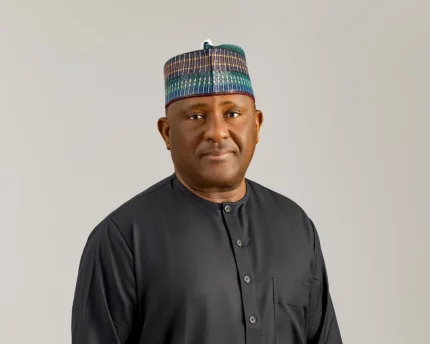
Abdul Samad Isyaku Rabiu (born 4 August 1960 in Kano, Nigeria) is a Nigerian industrialist, entrepreneur, and philanthropist. He is the founder and chairman of BUA Group, a diversified conglomerate operating in cement, sugar, food processing, real estate, logistics and manufacturing.
Today, he is known as one of the richest people in Nigeria and on the African continent. His personal journey from early exposure to business, to overcoming challenges, and rising to industrial dominance makes his story one of the most inspiring in modern entrepreneurship.
Early Life, Education and Family Background
Abdul Samad Rabiu was born into a business oriented family. His father, Khalifah Isyaku Rabiu, was one of Nigeria’s leading industrialists during the 1970s and 1980s. Growing up in a strong entrepreneurial environment shaped Rabiu’s mindset and ambitions from childhood.
He studied at Capital University in Columbus, Ohio, USA, where he completed his tertiary education. After graduation, he returned to Nigeria in his mid-20s, where he faced an unexpected responsibility. During this period, his father encountered legal and financial issues stemming from disputes related to import duties during a government crackdown.
With his father detained, Abdul Samad stepped in to manage the family’s business operations. This early exposure to crisis management would sharpen his strategic thinking and leadership skills, setting the foundation for his future empire.
The Beginning of His Business Journey
Founding BUA International Limited (1988)
In 1988, Abdul Samad Rabiu established BUA International Limited. The company began with commodity trading mainly rice, edible oil, flour, iron and steel. Nigeria, at that time, had growing demand for imported essential goods and weak domestic manufacturing, creating a profitable opportunity for young entrepreneurs.
Rabiu quickly built strong relationships with international suppliers, streamlined logistics, and expanded his distribution network across Nigeria. His reputation for reliability helped BUA gain significant market share in the importation sector.
Strategic Breakthrough: The Delta Steel Deal
A major turning point came in 1990 when BUA secured a government contract with Delta Steel Company. Under the agreement, BUA supplied raw materials to the steel plant and received finished products in exchange. This deal boosted BUA’s credibility and allowed Rabiu to transition from simple trading into full scale industrial operations.
Transition into Manufacturing and Diversification
Rabiu recognized that long term wealth required control over production, not just trading. Over the next decade, BUA established rolling mills, billet plants, and built a strong presence in Nigeria’s manufacturing sector. He reinvested profits aggressively, expanding into new industries.
This diversification strategy became one of the key drivers of his wealth.
BUA’s Expansion into Major Industrial Sectors
1. Cement Industry
Rabiu entered Nigeria’s cement market, which was dominated by a few large players. With strategic investments, he built cement plants, acquired assets, and expanded production capacity across the country. BUA Cement eventually became one of Nigeria’s largest cement producers, listed on the Nigerian Stock Exchange and valued in billions of dollars.
2. Sugar Refining and Food Processing
BUA also built large scale sugar refineries, flour mills, and edible oil processing plants. This put the group in direct competition with major players and helped break monopolies in the sugar market. By addressing supply gaps, BUA strengthened local production and reduced Nigeria’s dependence on imported refined sugar.
3. Real Estate, Infrastructure and Other Sectors
Beyond cement and sugar, BUA expanded into real estate development, ports and terminals, and other industrial ventures. These multiple revenue streams ensured resilience regardless of market fluctuations.
Net Worth Over Time
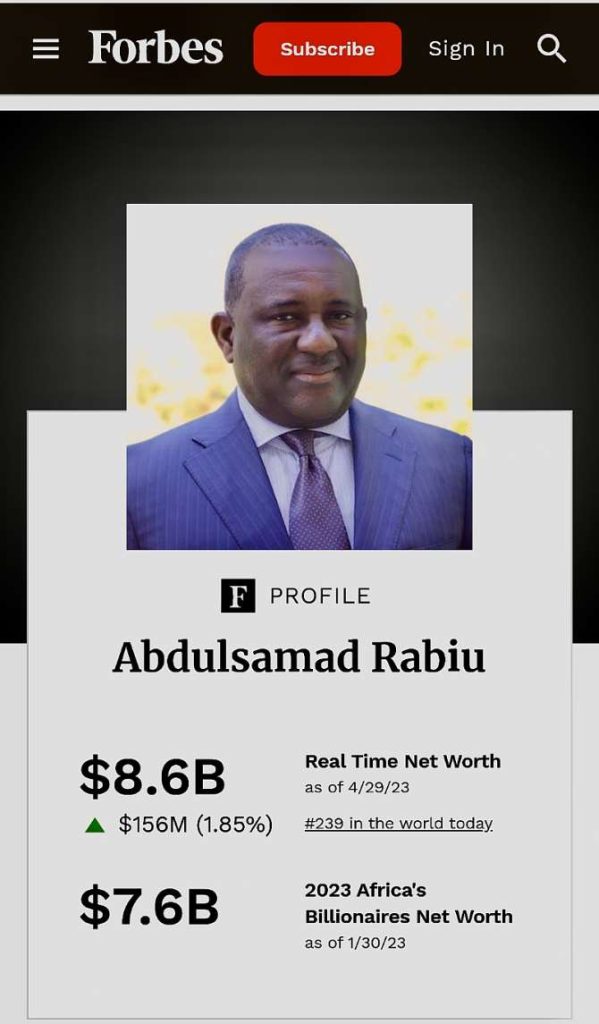
Abdul Samad Rabiu’s net worth has grown consistently over the decades as BUA Group scaled operations and expanded into capital-intensive sectors.
Here’s a timeline of his estimated net worth growth:
- 1980s–1990s: Early years in commodity trading, growing BUA International.
- 2000s: Investment in manufacturing, including steel, flour and oil mills.
- 2015: Approx. $1.2 billion as BUA began gaining national visibility.
- 2020: Forbes estimated his net worth around $3.2 billion, driven by cement and sugar operations.
- 2022: Estimates rose to about $6.7 billion.
- 2023: Net worth reached around $7 billion according to Business Insider Africa.
- 2024: As high as $7.6 billion according to public market valuations.
- 2025: Estimates fluctuate between $6 billion and $7.9 billion depending on sources and financial conditions.
Despite fluctuations due to market valuations and currency changes, Rabiu consistently ranks among Africa’s top billionaires.
How Abdul Samad Rabiu Built His Wealth
His financial success results from strategic moves that compound over decades. These include:
- Identifying gaps in essential industries such as cement and food.
- Diversifying across multiple sectors to reduce risk.
- Reinvesting profits into large-scale industrial operations.
- Breaking monopolies in sugar and cement markets.
- Securing government and private contracts that strengthened BUA’s early growth.
- Leveraging public markets by listing BUA Cement, increasing valuation and liquidity.
- Maintaining disciplined spending and long-term thinking.
- Building strong supply chains and logistics networks.
- Focusing on industries with consistent demand.
Philanthropy and Social Responsibility
Beyond business, Rabiu is known for significant charitable contributions. Through the BUA Foundation, he supports:
- Educational scholarships
- Health infrastructure
- Social welfare projects
- Donations to public institutions
- Emergency relief efforts
His philanthropic approach has helped improve millions of lives and earned him widespread respect across Nigeria.
Advice for Young People: Lessons from Abdul Samad Rabiu
Abdul Samad Rabiu’s story carries valuable lessons for aspiring entrepreneurs:
- Start where you are, with what you have. He began with trading before expanding into manufacturing.
- Think long term. Real wealth takes time to build.
- Invest in essential industries. Cement, food and commodities always have demand.
- Be resilient in crisis. His rise began when he stepped up during family challenges.
- Reinvest your profits. Don’t blow early success grow it.
- Find market gaps. Success often comes from solving problems others ignore.
- Stay disciplined. Wealth grows through structure, not luck.
- Stay humble and philanthropic. Giving back builds legacy and trust.
Frequently Asked Questions (FAQ)
What is Abdul Samad Rabiu’s current net worth?
His net worth ranges between $6 billion and $7.9 billion depending on market conditions and source of valuation.
How old is Abdul Samad Rabiu?
He was born on 4 August 1960, making him 65 years old in 2025.
Did he inherit his wealth?
Although he comes from a business-oriented family, the majority of his billion dollar empire was built independently through BUA Group.
What businesses does he own?
He owns BUA Cement, BUA Foods, BUA Sugar, real estate holdings, port operations and several manufacturing facilities.
How did he start?
He began with commodity trading in 1988 before moving into manufacturing.
Is Abdul Samad Rabiu involved in philanthropy?
Yes, through BUA Foundation he donates extensively to healthcare, education and community development.
Conclusion
Abdul Samad Rabiu’s rise from managing a family business during crisis to building one of Africa’s most powerful industrial conglomerates is a story of resilience, vision and long term planning. His investments in cement, sugar and manufacturing transformed him into one of the continent’s wealthiest individuals. More importantly, his disciplined approach to business, diversification, and philanthropy makes his legacy both impactful and inspirational.

I enjoy reading, chess, writing, and creating things for the internet. Since I was a child, I wanted to create meaningful things. Here, I found my purpose.