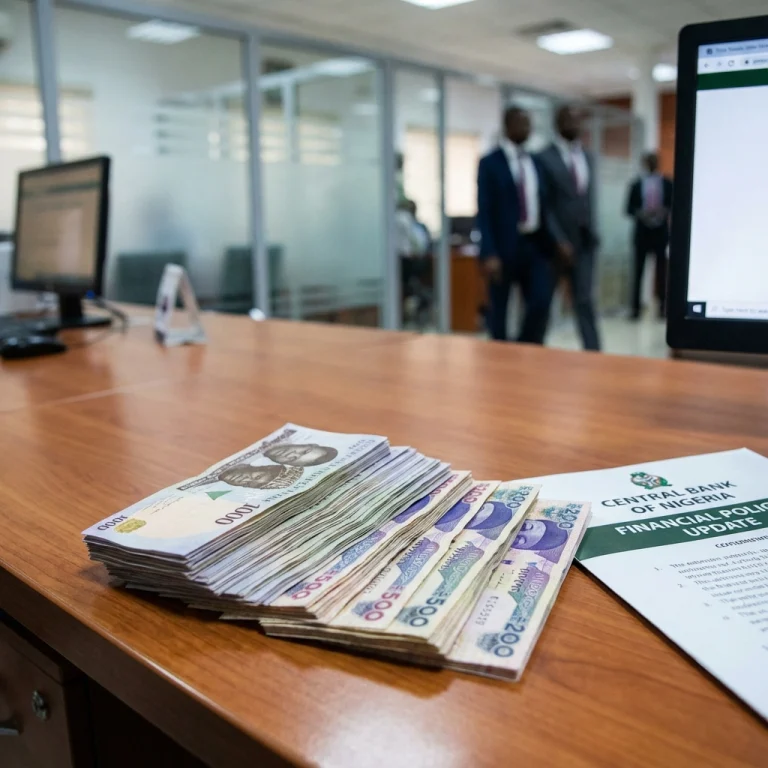

Top 10 Loan Fees Borrowers in Nigeria Should Watch in 2026
Anúncios
Top 10 Loan Fees Borrowers in Nigeria Should Watch in 2026
Borrowing money in Nigeria is not only about the amount you receive. It is also about the amount that quietly leaves your pocket later.
That is why loan fees matter so much.
In late April 2026, the conversation around borrowing costs became more important again after reports that the Central Bank of Nigeria had pushed for stronger disclosure around charges and changes in lending terms. For borrowers, this is a useful reminder: the real cost of a loan is often bigger than the headline rate.
A lender may advertise speed, convenience, or a low starting rate. But the real question is simpler: what exactly will this loan cost from start to finish?
This guide breaks that down in a practical Top 10 format.
The safest borrower is not the person who finds the fastest loan. It is the person who spots the full cost before accepting it.
Why Loan Fees Matter More Than Many Borrowers Realise
Many borrowers focus on one number only: how much they want to receive.
Anúncios
That is understandable, especially in urgent situations. But lenders can structure borrowing costs in different ways. A loan may look affordable at first, then become expensive because of extra charges, short repayment periods, or penalties that were easy to miss.
That is why checking fees is not a small detail. It is one of the most important parts of borrowing safely.
Anúncios
Top 10 Loan Fees Borrowers in Nigeria Should Watch
1. Interest Rate
This is the first number most people check, and it still matters.
The interest rate is the basic cost of borrowing the money. But borrowers should not stop there. A loan with a lower-looking interest rate can still become expensive if other fees are added on top.
Always ask:
- Is the rate monthly or annual?
- Is it fixed or can it change?
- Is it applied to the full loan amount or the reducing balance?
If those answers are unclear, the offer is incomplete.
2. APR or Total Cost of Credit
APR, where available, can give a fuller picture of what the loan really costs because it goes beyond the headline rate.
In practice, many borrowers in Nigeria still see loan offers where the total cost is easier to understand only after reading the fine print. That is a problem.
The smartest question is not “What is the interest rate?” It is “How much will I repay in total?”
3. Processing Fee
A processing fee is a common extra charge added when the loan is created or approved.
This fee may look small on its own, but it raises the total cost immediately. In some cases, it is deducted before the borrower even receives the money, meaning the amount that lands in the account is smaller than expected.
Always compare:
- amount approved
- amount disbursed
- total repayment
That gap often tells you a lot.
4. Management Fee
Some lenders charge a management or administration fee for handling the loan.
This is one of the charges borrowers often miss because it may sound routine or harmless. But even routine charges increase the cost of credit.
If the lender cannot explain the purpose of the fee clearly, ask more questions before proceeding.
5. Insurance or Credit Protection Charge
Some loans include insurance-related costs or protection fees. These charges may be presented as standard or helpful, but borrowers should still understand whether they are required and how much they add to the full repayment amount.
This does not always mean the charge is unfair. It simply means the borrower should know it is there.
6. Late Payment Fee
Late payment fees can turn a manageable loan into a stressful one very quickly.
If you miss a due date, some lenders may add a fixed penalty, extra interest, or both. This matters even more for short-term loans and loan apps where the repayment window is already tight.
Before borrowing, check:
- what happens if payment is late
- how much the penalty is
- whether the fee is charged once or repeatedly
- whether late payment triggers other costs
7. Default Charges
Late payment and default are not always treated the same way.
A lender may allow a short grace period before classifying the loan as defaulted. After that, the charges or consequences may increase. This can include stronger collection action, added costs, or negative reporting consequences where applicable.
Borrowers should never assume that missing a date by “just a little” has no financial effect.
8. Early Repayment Fee
This surprises many people.
Some borrowers assume paying off a loan early should always be free or even rewarded. In reality, some loan products may include an early repayment charge or rules that limit how much benefit the borrower gets from settling early.
Before accepting a loan, ask whether early repayment:
- is allowed
- reduces total cost
- attracts any fee
- changes the interest calculation
9. Renewal or Extension Fee
Short-term lenders sometimes offer renewals, rollovers, or extensions if the borrower cannot repay on time. That may sound helpful, but it can come with a new layer of fees.
A borrower who keeps extending a loan may end up paying repeatedly without reducing the underlying problem.
This is why renewals should be treated carefully. They can create the feeling of relief while quietly increasing total cost.
10. Hidden Deduction or Miscellaneous Charge
This is the category many borrowers fear most because it is the hardest to spot in advance.
A hidden deduction may appear as:
- an unexplained debit
- a vague service charge
- a convenience fee
- an unexpected verification charge
- a poorly explained platform or maintenance fee
Not every extra charge is automatically abusive. But every extra charge should be visible, understandable, and disclosed clearly before the borrower accepts the loan.
Quick Comparison Table
| Fee Type | What It Means | Why It Matters |
|---|---|---|
| Interest rate | Basic borrowing cost | Sets the visible price of the loan |
| APR or total cost | Broader cost view | Helps compare real affordability |
| Processing fee | Charge at setup | Reduces net amount received |
| Management fee | Admin-related charge | Increases overall repayment |
| Insurance charge | Added protection cost | May be required or bundled in |
| Late fee | Penalty for delay | Can grow cost quickly |
| Default charge | Cost after serious non-payment | Increases pressure and risk |
| Early repayment fee | Charge for settling early | Can reduce flexibility |
| Renewal fee | Cost of extension | Can trap borrowers in repeated fees |
| Hidden deduction | Poorly explained extra charge | Often signals weak transparency |
What Borrowers Should Check Before Accepting Any Loan
Use this quick checklist before saying yes to any offer:
- Ask how much will be repaid in total
- Check whether any fees are deducted before disbursement
- Read the late payment rules carefully
- Ask whether the rate or charges can change
- Compare at least two lenders
- Save screenshots or written records of the offer
- Avoid any lender that cannot explain its charges in plain language
Why This Matters More in 2026
This issue matters even more now because borrowers are paying closer attention to transparency. As the conversation around disclosure and lending charges becomes stronger in Nigeria, borrowers should also become more disciplined.
That does not mean every lender is unsafe. It means every borrower should become better at reading the true price of credit.
The best borrowing decision is often not the fastest offer. It is the clearest one.
Top 10 Red Flags Around Loan Fees
Here is a bonus list worth watching:
- The lender shows the disbursed amount but hides the total repayment.
- Fees appear only at the final step.
- The repayment date is not clearly stated.
- Charges use vague names.
- Support staff cannot explain the fees simply.
- The app updates the terms without proper notice.
- The penalty for lateness is harder to find than the loan offer.
- The lender pressures you to accept quickly.
- The advertised rate looks low but the total cost looks high.
- The lender’s explanation changes when you ask follow-up questions.
FAQ
What is the most important loan fee to check first?
Start with the total repayment amount, not just the headline interest rate.
Is a low interest rate enough to prove a loan is affordable?
No. Processing fees, penalties, and other charges can make the loan much more expensive.
Why do some borrowers receive less than the approved amount?
Because some lenders deduct fees such as processing or management charges before disbursement.
Are loan app fees different from bank loan fees?
They can be. Loan apps may move faster, but short repayment windows and additional charges can still make them expensive.
Is it bad to repay a loan late by a few days?
It can be costly, depending on the lender’s rules. Late fees and default-related charges can build quickly.
What should I do if a fee is unclear?
Do not accept the loan until the lender explains the charge clearly and you understand the total cost.
Final
The real cost of borrowing in Nigeria is rarely just one number. Interest matters, but so do processing fees, management charges, late penalties, renewal costs, and hidden deductions.
If there is one rule worth remembering, it is this: never judge a loan by the amount offered alone. Judge it by the full cost of getting out of it.

I enjoy reading, chess, writing, and creating things for the internet. Since I was a child, I wanted to create meaningful things. Here, I found my purpose.