
Money tips: How to protect your savings from Naira devaluation
The Invisible Thief Taking Your Money
Every Nigerian who has closely monitored the economic climate over the past few years understands a painful truth: keeping your savings entirely in Naira is rapidly becoming the quickest way to lose your wealth. The continual devaluation of the Naira against major foreign currencies, coupled with double-digit inflation rates, acts as an invisible thief. It quietly siphons away your purchasing power while you sleep.
Consider this: if you saved one million Naira five years ago, it might have comfortably bought you a reliable used car and several household appliances. Today, that exact same one million Naira might barely cover a fraction of a similar car’s cost. The numerical value of your bank balance remained identical, but what that money could actually buy plummeted heavily. This phenomenon demands immediate defensive action. To survive and build generational wealth in Nigeria in 2026, you must completely pivot from traditional saving to strategic asset protection. This incredibly comprehensive guide provides the ultimate blueprint on how to protect your savings from the relentless tide of Naira devaluation.
1. Open and Utilize a Domiciliary Account
The most straightforward and globally recognized method to shield your money from local currency volatility is holding foreign, stable currencies. A domiciliary account allows you to possess a localized bank account that operates strictly in US Dollars (USD), Euros (EUR), or British Pounds (GBP). Most major commercial banks in Nigeria, such as GTBank, Zenith Bank, UBA, and Stanbic IBTC, offer these services.
Why This Matters:
By swapping your excess Naira into USD when you can, you effectively lock its value against global standards. If the Naira drops against the dollar from 1,200 to 1,500, an individual holding Naira simply loses purchasing power. However, the individual holding $1,000 maintains their international purchasing power entirely.
Action Steps:
- Approach your bank to request a domiciliary account. Requirements usually include two referees.
- Alternatively, explore ‘zero balance’ digital domiciliary offerings from some banks which drastically reduce the paperwork required.
- Whenever you experience a surplus in income, legally source foreign exchange and deposit the physical notes or transfer them into your domiciliary account.
2. The Fintech Revolution: Digital Dollar Wallets
For many young Nigerians and mid-level professionals, engaging with commercial banks for a traditional domiciliary account can be mentally exhausting. The bureaucracy of finding referees and funding minimum balances can deter anyone. Thankfully, the explosion of wealth-tech (wealth technology) has completely democratized foreign currency savings.
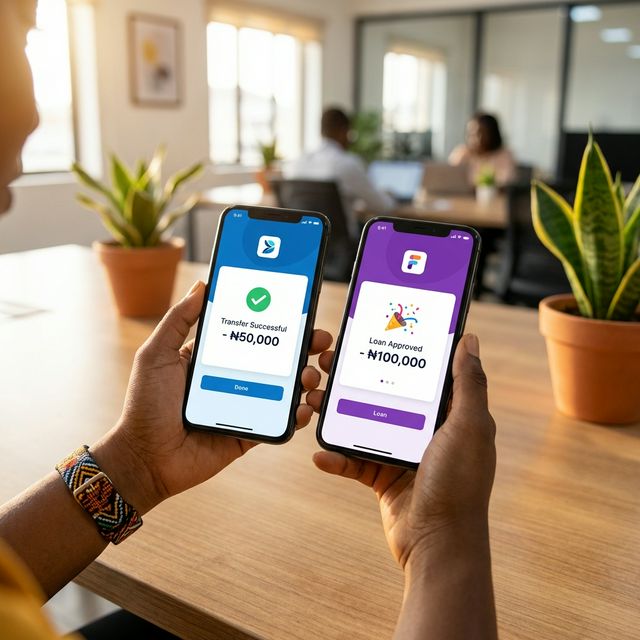
Applications like Risevest, PiggyVest (Flex Dollar feature), Bamboo, and Chaka were built precisely to solve this problem. These apps allow you to deposit your Naira from your local bank seamlessly via debit card or bank transfer. The platform instantly converts your Naira into a dedicated virtual dollar wallet at current market rates.
The Power of Double Yields:
Not only do these platforms store your money in stable USD, but they also deploy that capital into low-risk international investments, such as US Treasury Bonds, Eurobonds, or prime real estate index funds. Consequently, you are protecting against Naira depreciation AND earning an Annual Percentage Yield (APY) often ranging between 5% and 8% in dollars. It is the absolute pinnacle of defensive financial strategy.
3. Investing in Tangible Assets (Real Estate & Agriculture)
Money in a bank account is a printed liability subject to central bank policies. Tangible assets are real. They physically exist, and because materials and labor become more expensive during inflation, real estate and agricultural commodities automatically increase in price to match inflation.
Real Estate & Land Banking:
Buying a house in Lekki, Lagos or Maitama, Abuja might be exclusively for the wealthy, but “Land Banking” is accessible to the middle class. Land banking involves purchasing plots of land in rapidly developing peri-urban areas on the outskirts of major cities (such as Epe, Mowe, or Ibeju-Lekki in Lagos, or Lugbe extensions in Abuja). As the city expands over five to ten years, the value of that land skyrockets, massively outpacing standard inflation rates.
Equipments and Commodities:
If you cannot afford land, you can invest your savings in non-perishable agricultural commodities during harvest seasons (like soybeans, maize, or sesame seeds) and store them safely. A few months later, their prices naturally surge, providing explosive profits. Alternatively, you can buy durable equipment like heavy-duty generators or tractors and lease them out, locking your wealth in undeniable physical value.
4. Safe Cryptocurrency and Stablecoins Hedge
When people mention cryptocurrencies, the first thoughts are usually Bitcoin, Ethereum, crushing volatility, and high risk. However, the crypto sector offers a powerful financial instrument completely free of volatility: Stablecoins.
Assets like USDT (Tether), USDC (USD Coin), and BUSD are cryptographic tokens tightly pegged 1-to-1 to the US dollar. One USDT is always designed to equal exactly one US Dollar. For young, tech-savvy Nigerians, this has become the dominant method of saving.
How to Execute:
- Open a verified account on reputable global exchanges like Binance, Bybit, KuCoin, or local operators like YellowCard.
- Use their P2P (Peer-to-Peer) markets to swap your Naira for USDT seamlessly and legally.
- Transfer your stablecoins into secure self-custodial wallets (like Trust Wallet or MetaMask) or hardware wallets (like Ledger) for maximum security.
- You can also utilize ‘staking’ options to earn interest on these stablecoins, far exceeding traditional fixed deposit rates.
5. Earning in Foreign Currency (The Ultimate Hedge)
Saving your way to wealth during a currency crisis is like trying to empty a flooding boat with a tiny cup. You must dramatically increase the influx of strong currency. The most permanent and life-changing method to hedge against the Naira is literally removing yourself from the Naira earning ecosystem entirely.
Acquiring High-Income Global Skills:
In 2026, the global remote work infrastructure is robust. You can live in Ibadan or Kano and be fully employed by an agency in Texas or London. You must transition your skills towards those demanded globally:
- Software Engineering and Web Development (Full-stack, Frontend).
- UI/UX Design and Product Management.
- Search Engine Optimization (SEO) Analysis and Technical Content Writing.
- Data Science and Artificial Intelligence Prompt Engineering.
By earning purely in dollars or pounds and spending your earnings in Naira, inflation drastically stops looking like a threat, and actually starts working to your mathematical advantage due to favorable exchange conversions.
Frequently Asked Questions (FAQs)
Is it risky to put all my money in digital dollar apps?
Diversification is the first rule of finance. While apps like Risevest and Bamboo are regulated by the SEC and partner with insured US brokers, you should never place 100% of your net worth in a single platform. Spread your investments across domiciliary accounts, physical assets, and multiple digital platforms.
What if the Naira gains massive value? Will I lose my dollar savings?
If the Naira strengthens, the “mathematical” Naira value of your dollar savings will decrease. However, your international purchasing power (how many phones, cars, or foreign raw materials you can buy) remains completely unchanged. Saving in dollars is a conservative, stabilizing strategy, not a speculative gamble.
Are local fixed deposits useless now?
Not entirely. The CBN monetary policy rate (MPR) periodically climbs up to combat inflation. Some commercial banks currently offer extremely high yields on fixed deposits or commercial papers. If you can lock in a secure 18% to 22% annual return in Naira, it serves as excellent short-term liquidity storage, provided inflation is dropping.
Final Conclusion: Act Before It’s Too Late
Financial ignorance is no longer an excuse in 2026. The tools to build a fortress around your wealth are completely in your hands. Do not let your lifelong savings waste away in low-interest localized accounts while macroeconomic forces rage outside. Adopt a strategy.
Open that domiciliary account, download a verified digital wealth app to access US securities, buy stablecoins, and aggressively pivot your career towards earning in foreign exchange. By combining these powerful methods, you not only protect yourself against devaluation, but you actively position your household to thrive and accumulate massive generational wealth despite the economy.

I enjoy reading, chess, writing, and creating things for the internet. Since I was a child, I wanted to create meaningful things. Here, I found my purpose.